Motivation and emotion/Book/2025/Cultivating awe
Subtitle?
Seek approval for any changes.
Do not include your name (for authorship, see this page's edit history).
Overview
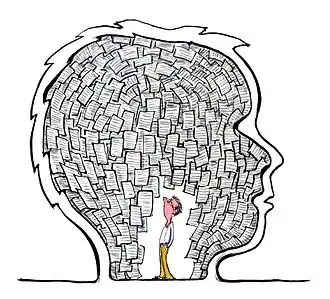 Start with an engaging scenario or case study which illustrates the problem and engages reader interest. Include an image (e.g., see Figure 1). Present the scenario in a feature box. The feature box colour can be changed by:
|
This template provides tips for the topic development exercise. Gradually remove these suggestions as the chapter develops. It is OK to retain some of this template content for the topic development exercise. Also consult the book chapter guidelines.
The Overview is typically consists of one to four paragraphs between the scenario and focus questions. Suggested word count for the Overview: 180 to 330 words.
|
|

|
Focus questions: Break the problem (i.e., the sub-title) down into three to five focus questions. Focus questions can also be used as top-level headings.
Ask open-ended focus questions. For example:
|


Headings
- Aim for three to six main headings between the Overview and Conclusion
- Sub-headings can also be used, but:
- avoid having sections with only one sub-heading
- provide an introductory paragraph before breaking into sub-sections
Key points
- Provide at least three bullet-points per heading and sub-heading, including for the Overview and Conclusion
- Include key citations
Figures

- Use figures to illustrate concepts, add interest, and to serve as examples
- Figures can show photos, diagrams, graphs, video, audio, etcetera
- Embed figures throughout the chapter, including the Overview section
- Figures should be captioned (using Figure #. and a caption). Use captions to explain the relevance of the image to the text
- Wikimedia Commons provides a library of embeddable images
- Images can also be uploaded to Wikimedia Commons if they are openly licensed
- Refer to each figure at least once in the main text (e.g., see Figure 2)
Learning features
Interactive learning features help to bring online book chapters to life and can be embedded throughout the chapter.
- Scenarios
- Scenarios, case studies, or examples describe concepts in action
- Can be real or fictional; if real, provide citations
- Can be split into multiple boxes throughout a chapter (e.g., to illustrate different theories or stages)
- Present using feature boxes
- Feature boxes
- Highlight key content using a feature box. Don't overuse feature boxes, otherwise they lose their effect.
- Consider using feature boxes for:
- Scenarios, case studies, or examples
- Focus questions
- Tips
- Quiz questions
- Take-home messages
- Embedded links
- When key words are introduced, use interwiki links to:
- Wikipedia articles (e.g., "An early psychological view dreams) of dreams was provided by Sigmund Freud".)
- Related book chapters (e.g., "If you're feeling stuck, check out the chapter about writer's block".)
- Tables
- Use to organise and summarise information
- Tables should be captioned
- Refer to each table at least once in the main text (e.g., see Table 1)
- Example 3 x 3 tables which could be adapted
Table 1. Descriptive Caption Which Explains The Table and its Relevant to the Text - Johari Window Model
| Known to self | Not known to self | |
|---|---|---|
| Known to others | Open area | Blind spot |
| Not known to others | Hidden area | Unknown |
- Quizzes
- Using one or two revision questions per major section is better than a long quiz at the end
- Quiz conceptual understanding, rather than trivia
- The best quiz questions are about important information take-home messages
- The best quiz questions are simple rather than hard
- Different types of quiz questions are possible; see Quiz
Example simple quiz questions. Choose your answers and click "Submit":
Conclusion
- The Conclusion is arguably the most important section
- Suggested word count: 150 to 330 words
- It should be possible for someone to only read the Overview and the Conclusion and still get a pretty good idea of the problem and what is known based on psychological science
|
|
See also
Provide internal (wiki) links to the most relevant Wikiversity pages (esp. related motivation and emotion book chapters) and Wikipedia articles. Use these formats:
- Collaborative authoring using wiki (Wikiversity)
- Light triad (Book chapter, 2021)
- Self determination theory (Wikipedia)
|
|
References
List cited references in APA style (7th ed.) or wiki style.
APA style example:
Sacks, O. (1985). The man who mistook his wife for a hat and other clinical tales. Harper & Row.
|
|
External links
Provide external links to highly relevant resources such as podcasts and videos, news articles, and professional sites. Use sentence casing. For example:
- Six top tips for writing a great essay (University of Melbourne)
- The importance of structure (skillsyouneed.com)
|
|